Day-by-Day Stages in Karolak Natural Neck Lift Recovery
Recovering from a neck lift is a journey that unfolds in distinct phases, each with its own set of expectations and milestones. Understanding this cervicoplasty timeline and platysmaplasty healing process is crucial for patients to manage their recovery effectively. While individual healing varies, a general timeline offers a valuable roadmap for what to anticipate. The initial days focus on managing acute symptoms, gradually progressing to social re-engagement and, eventually, the subtle, long-term refinement of your new neck contour.
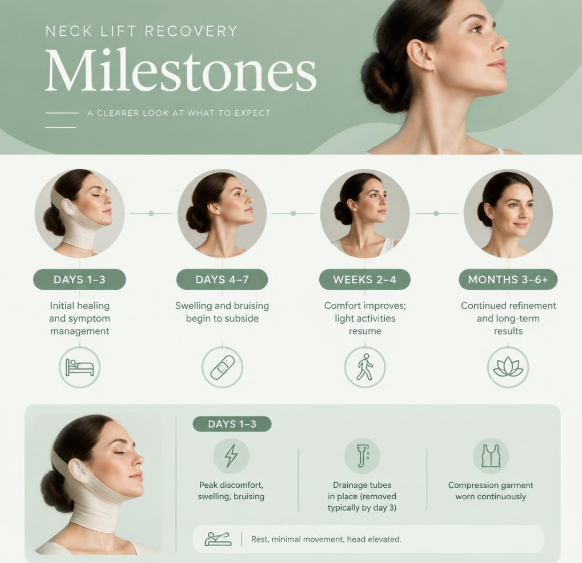
The table below provides a general overview of the recovery milestones from the immediate post-operative period through several months, highlighting key aspects of the healing process.
Recovery Phase Key Milestones & Symptoms Return to Activities Days 1-3 Peak discomfort, swelling, bruising; drainage tubes in place (removed typically by day 3); compression garment worn continuously. Rest, minimal movement, head elevated. Days 4-7 Swelling and bruising often peak; discomfort subsides; sutures may be removed or begin dissolving; light walking encouraged. Gentle, short walks; continued rest; no strenuous activity. Weeks 2-4 Significant reduction in swelling and bruising; feeling socially presentable; initial tightness may be noticeable; return to sedentary work. Most daily activities; light exercise (walking); return to non-physical work. Months 2-3 Swelling largely resolved; continued softening of tissues; persistent tightness may gradually diminish; sensation may return to numb areas. Moderate exercise; most social activities; progressive return to normal routine. Months 4-6 Final refinement of neck contour; tightness typically subsides; scars continue to mature and fade; full appreciation of results. Full return to all activities, including strenuous exercise (with surgeon’s approval). Days 1 to 3: Managing Initial Swelling and Drainage
The first few days following a neck lift are characterized by acute inflammation, swelling, and bruising. Patients will typically have drainage tubes inserted, which are crucial for preventing fluid accumulation and promoting optimal healing. These tubes are usually kept in place until fluid or blood stops draining, which is often within 1 to 3 days post-surgery. A compression garment is also applied immediately after the procedure and must be worn continuously, except when showering, to minimize swelling and support the newly contoured tissues.
Managing discomfort during this period is paramount. Mild analgesics, often prescribed by your surgeon, can effectively manage post-operative soreness. Maintaining proper post-op head elevation, even while sleeping, is critical to reduce swelling and aid in lymphatic drainage. Sleeping with your head elevated on several pillows or in a recliner can make a significant difference.

Days 4 to 7: Peak Swelling and Early Mobility
As the first week progresses, patients often experience the peak of swelling and bruising, typically around days 3 to 5 after surgery. While this might seem concerning, it’s a normal part of the healing process. Discomfort usually begins to subside, and any remaining drainage tubes are generally removed by this point.
Suture care is important during this phase. Patients will receive specific instructions on how to clean incision sites and apply any prescribed ointments. While strenuous activities must still be avoided, light walking is encouraged to promote circulation and prevent blood clots. Maintaining a resting posture that keeps the head elevated and avoids excessive neck movement remains essential. Patients should continue wearing their compression garment as directed by their surgeon, which is often for up to one week.
Weeks 2 to 4: Returning to Social and Professional Life in Karolak Natural Neck Lift Recovery
By the second week, significant improvements are usually noticeable. The initial bruising and swelling will have substantially diminished, making most people look socially presentable by 10 to 14 days after surgery. This is often the point where patients feel comfortable returning to their normal daily activities and work, particularly if their job is sedentary. It’s vital, however, to continue avoiding any strenuous activities or heavy lifting for the full two weeks post-op to prevent complications and ensure proper healing.
During this period, a feeling of tightness around the neck is common. This sensation is a result of the internal muscle tightening (platysmaplasty) and skin redraping, indicating that the tissues are settling into their new, more youthful position. For those seeking a refined and natural outcome, understanding the nuances of this stage is key to a successful Karolak natural neck lift recovery. While patients can resume non-strenuous routines, it’s important to listen to your body and avoid pushing yourself too hard.
Months 2 to 6: Tissue Softening and Final Refinement in Karolak Natural Neck Lift Recovery
The journey to final results extends beyond the initial weeks. From two months to six months post-surgery, the neck tissues undergo a process of subcutaneous softening. Any residual swelling continues to resolve, and the platysma muscle, which was tightened during the procedure, fully adheres to its new position. Lymphatic drainage continues to improve, contributing to a smoother, more refined contour.
The feeling of tightness, which can persist for a few weeks to a few months, gradually diminishes during this period as the tissues relax and adapt. While significant improvements are visible much earlier, the final refinement of results continues for 3 to 6 months after surgery. Patience is key, as the true aesthetic outcome becomes fully apparent as the body completes its healing and remodeling processes.
Managing Sensation Changes, Bruising, and Neck Tightness
Understanding and managing the common sensations and visible changes during neck lift recovery is crucial for a smooth experience. Patients frequently report feelings of submental tension, particularly after platysmal tightening, along with varying degrees of bruising and altered skin sensation. These are normal aspects of the healing process and typically resolve over time.
Understanding the Sensation of Neck Tightness
The sensation of tightness around the neck is one of the most commonly reported experiences during recovery. This isn’t merely a feeling of taut skin; it’s a direct result of the internal work performed during the neck lift, particularly the platysmaplasty. When the platysma muscle is tightened and re-suspended, it creates an internal support system that can feel restrictive initially. This muscle healing and adaptation contribute significantly to the tension.
The duration of this tightness can vary, lasting from a few weeks to several months after the procedure. It’s a positive sign, indicating that the underlying structures have been effectively addressed to create a more defined jawline and neck contour. Understanding your unique de Castro anatomy—the way your platysma muscles are naturally structured—can also influence how you perceive and experience this tension, as different muscle patterns require different surgical approaches. Over time, as the tissues soften and adapt, this sensation gradually diminishes.
Managing Postoperative Bruising and Numbness
Bruising, or ecchymosis, is an inevitable part of any surgical procedure. After a neck lift, patients will experience varying degrees of superficial ecchymosis, which typically appears as discoloration around the neck and jawline. While initial bruising and swelling will often resolve on their own, which may take several weeks, applying cold compresses as directed by your surgeon can help minimize its severity and duration in the early days.

Changes in skin sensation, including numbness, are also common. Sensory nerves in the neck area can be temporarily affected by the surgical process. Patients might experience areas of reduced sensation or even a complete lack of feeling. This is usually temporary, and gradual reinnervation occurs over several weeks to months as the nerves heal. It’s important to protect numb areas from extreme temperatures, as you may not be able to feel if something is too hot or too cold.
Procedure Variations and How They Impact Healing Timelines
The recovery timeline for a neck lift isn’t a one-size-fits-all scenario. Several factors can influence how quickly and smoothly a patient heals, with the type of anesthesia used and the extent of the surgical procedure being among the most significant. These elements directly impact tissue trauma, systemic recovery, and overall healing dynamics.
Local Anesthesia Versus General Anesthesia Recovery
The choice of anesthesia can play a notable role in the immediate post-operative experience and initial recovery. General anesthesia, while ensuring complete comfort during the procedure, can lead to systemic grogginess, nausea, and a longer recovery from the anesthetic itself. Patients may feel disoriented for several hours and require more time to fully wake up.
In contrast, a neck lift performed under local anesthesia with sedation often allows for earlier mobilization and can significantly reduce post-operative nausea. Patients typically feel more alert sooner, potentially leading to a quicker return to light activities. This approach can be particularly appealing for those looking to minimize the systemic effects and associated recovery time often linked with general anesthesia.
Here’s a comparison of how these anesthesia types can affect recovery parameters:
Recovery Parameter Local Anesthesia with Sedation General Anesthesia Immediate Post-Op Alertness Often more awake and alert sooner. Can experience significant grogginess and disorientation for several hours. Nausea & Vomiting Lower incidence of post-operative nausea and vomiting. Higher potential for nausea and vomiting, requiring anti-nausea medications. Immediate Mobility May feel capable of gentle movement and walking sooner. Slower to mobilize due to residual anesthetic effects. Pain Management Local anesthetic provides prolonged numbness; oral pain relievers for breakthrough pain. Pain managed with stronger oral or IV medications as local wears off. Overall Recovery Feel Often described as a “lighter” recovery, with fewer systemic side effects. Can feel more “heavy” or “drained” initially, with a longer systemic recovery period. Isolated Platysmaplasty Versus Combined Procedures
The scope of the neck lift procedure itself is a primary determinant of recovery duration. An isolated platysmaplasty, which primarily focuses on tightening the platysma muscle bands, typically involves less tissue disruption than a more comprehensive procedure. This can lead to a slightly faster initial recovery with less swelling and bruising.
However, many patients require a combined neck lift, which might involve cervicoplasty (skin removal), liposuction for excess fat, and potentially deep neck sculpting to address structures like the submandibular glands or digastric muscles. A lower rhytidectomy, which often combines a neck lift with a lower facelift, also involves more extensive tissue elevation and manipulation. These more involved procedures naturally entail a longer recovery period due to increased tissue trauma, more extensive dissection, and a greater potential for swelling and bruising. The surgeon’s tailored approach, balancing the desired aesthetic outcome with minimizing invasiveness, plays a critical role in optimizing the healing dynamics for each patient.
Essential Postoperative Aftercare and Recovery Best Practices
Adhering to strict aftercare protocols is paramount for achieving optimal results and minimizing complications during neck lift recovery. Proper wound hygiene, diligent incision care, protection from the sun, and understanding scar maturation are all critical components of this phase. These practices not only promote healing but also contribute significantly to the longevity and aesthetic quality of the outcome.
Proper Sleep Positioning and Head Elevation
One of the most critical aspects of early neck lift recovery is maintaining proper sleep positioning and head elevation. Keeping your head elevated above your heart, even while sleeping, helps to reduce swelling (edema) and bruising. This is particularly important for the first one to two weeks post-surgery.
Here are some guidelines for optimal sleep positioning:
- Use Wedge Pillows: Invest in a wedge pillow or stack several regular pillows to create an incline that keeps your head and upper body elevated at a 30 to 45-degree angle.
- Sleep on Your Back: It is crucial to sleep supine (on your back) to avoid putting pressure on the incision sites and to maintain cervical alignment. Sleeping on your side or stomach can exacerbate swelling and potentially distort the healing tissues.
- Avoid Neck Twisting: Try to keep your head in a neutral position, avoiding excessive rotation or bending of the neck. Small rolled towels or neck pillows can help support your head and prevent inadvertent movements during sleep.
- Recliner Option: Many patients find sleeping in a recliner comfortable and effective for maintaining elevation during the initial recovery period.
Activity Restrictions and Resuming Exercise Safely
Following a neck lift, certain activity restrictions are essential to prevent complications such as increased swelling, bleeding, or strain on the healing tissues. For the first two weeks post-op, patients must avoid strenuous activities, heavy lifting, and any activities that significantly raise blood pressure. This includes bending over or straining.
Gradual reintroduction of exercise is key:
- Gentle Walking: Light walking is encouraged from the first few days to promote circulation and prevent blood clots, but it should not be strenuous.
- Light Cardio: After about two to three weeks, with your surgeon’s approval, you can typically resume light cardiovascular workouts, such as brisk walking or stationary cycling, as long as they don’t involve bouncing or excessive head movement.
- Avoid Heavy Lifting: Heavy weight lifting or exercises that put strain on the neck and upper body should be avoided for at least four to six weeks, or longer, depending on your surgeon’s specific instructions. This is crucial to protect the integrity of the internal sutures and prevent undue stress on the healing muscles.
- Progressive Strain: When resuming more intense activities, do so gradually. Listen to your body and stop if you feel any pain or discomfort. Your surgeon will provide a personalized timeline for returning to your full exercise routine.
Frequently Asked Questions About Neck Lift Recovery
Patients often have specific questions about the timeline and sensations associated with neck lift recovery. Addressing these common inquiries helps set realistic expectations and provides reassurance during the healing process.
How long does neck tightness last after surgery?
The sensation of neck tightness is a very common and normal part of the healing process after a neck lift, particularly following platysmal repair. This tightness results from the internal muscle tightening and skin redraping, which creates a firmer, more defined contour. While it can be noticeable, it typically indicates that the underlying structures are healing and settling into their new position.
For most patients, this feeling of tightness around the neck can last from a few weeks to a few months after the procedure. It gradually diminishes as the tissues soften, the muscles adapt, and sensory adaptation occurs. While it might feel unusual, it rarely causes significant pain and is a temporary phase in the journey to your final results.
When can I safely return to work and exercise?
The timeline for returning to work and exercise depends on the nature of your activities and your individual healing progress.
- Return to Work: For those with sedentary jobs, most people can comfortably return to work within 2 weeks of the surgery. By this time, the majority of noticeable bruising and swelling will have subsided, allowing you to look socially presentable. If your job involves physical exertion or heavy lifting, you will need a longer period of rest, typically 4 to 6 weeks, and your surgeon will provide specific guidance.
- Return to Exercise: Light activities like walking can be resumed within a few days post-op. However, strenuous activities, including running, heavy lifting, and high-impact sports, must be avoided for at least 2 to 4 weeks. Your surgeon will advise you on a progressive return to more vigorous exercise, usually around 4 to 6 weeks, once the internal healing is sufficiently advanced to prevent complications.
How long does it take for incisions and scars to fully fade?
The incisions from a neck lift are strategically placed to be as inconspicuous as possible, often hidden under the chin and behind the ears. While the initial incisions will be red and noticeable, they gradually mature and fade over time.
Surgical scars typically take 12 to 18 months to fade and become paler, flatter, and softer. During this scar remodeling phase, diligent incision care, including keeping them clean and protected from the sun, is crucial. Sun exposure can cause scars to darken and become more prominent. Your surgeon may also recommend scar-reducing creams or treatments to optimize their appearance. While scars will never completely disappear, they generally become very subtle and blend well with the surrounding skin.
Conclusion
Embarking on a neck lift journey is a significant decision, and understanding the nuances of neck lift recovery time is fundamental to a successful outcome. From the initial days of managing swelling and drainage to the months of tissue softening and final refinement, patience is the most valuable asset a patient can possess. By adhering to aftercare instructions, recognizing common sensations like tightness, and understanding how different procedural variations impact healing, individuals can navigate their recovery with confidence.
The goal of a neck lift is to achieve a lasting, more youthful contour, and this is realized through a combination of expert surgical technique and diligent post-operative care. While the recovery timeline requires commitment, the eventual aesthetic transformation and renewed self-confidence make the journey worthwhile, providing a refreshed appearance that can last for many years.