Introduction
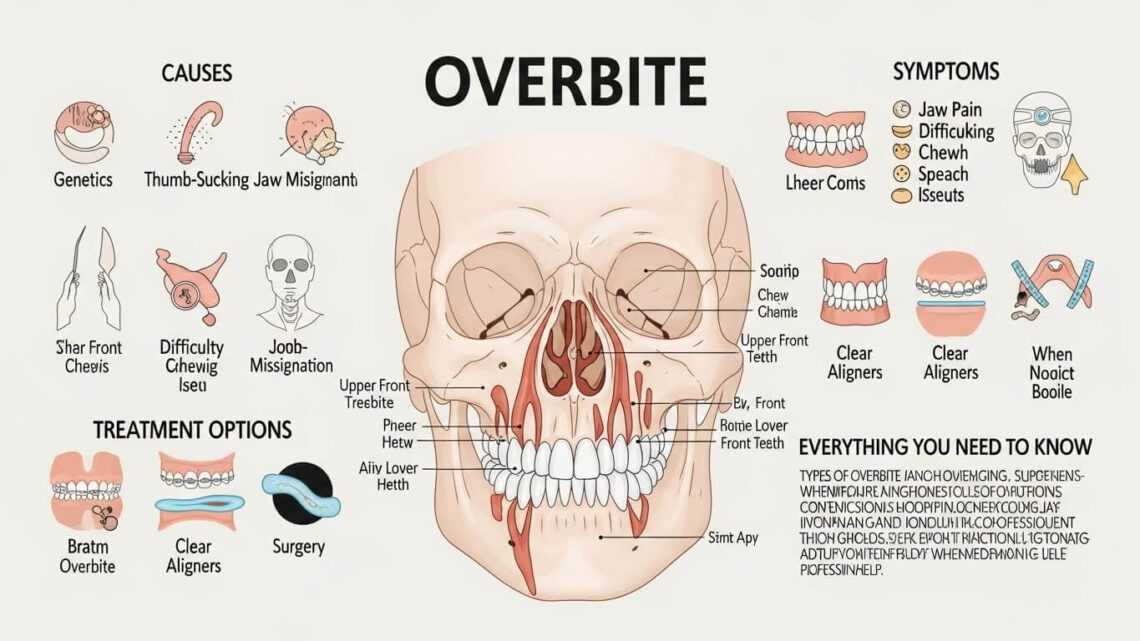
An overbite is one of the most common dental conditions in the world, yet many people do not fully understand what it is or whether it needs treatment. Some people live with a mild overbite without any issues, while others experience discomfort, pain, or confidence problems because of it. An overbite can affect not only how your smile looks but also how your teeth function and how comfortable your jaw feels.
This article explains overbite in simple words. You will learn what an overbite is, why it happens, how it affects your health, and what treatment options are available for both children and adults.
What Is an Overbite?

An overbite happens when the upper front teeth overlap the lower front teeth more than normal. A small amount of overlap is natural and healthy, but when the overlap is too large, it becomes a dental concern. Overbites can be visible when smiling or noticeable when biting down.
Overbites can be mild, moderate, or severe. Some people are born with them, while others develop them over time due to habits or dental changes.
Understanding Normal Bite vs Overbite
In a normal bite, the upper teeth slightly cover the lower teeth, allowing the jaw to close comfortably. This alignment helps with chewing, speaking, and protecting the teeth from damage.
An overbite becomes a problem when the upper teeth cover too much of the lower teeth. This can lead to uneven pressure, tooth wear, and jaw discomfort over time.
Types of Overbite
There are two main types of overbite: dental overbite and skeletal overbite. A dental overbite is caused by the position of the teeth, while a skeletal overbite is caused by the shape or size of the jaw bones.
Dental overbites are more common and often easier to treat. Skeletal overbites may require more advanced treatment depending on severity.
Common Causes of Overbite
Overbite can develop for many reasons. Genetics plays a major role, meaning it often runs in families. Jaw size differences between the upper and lower jaws can lead to an overbite.
Childhood habits such as thumb sucking, pacifier use beyond early childhood, or tongue thrusting can also cause an overbite. Teeth grinding and poor oral posture may make an overbite worse over time.
Overbite in Children
Overbite is often first noticed during childhood when baby teeth or early permanent teeth come in. Early evaluation is important because a growing child’s jaw is easier to guide into proper alignment.
Treating an overbite early may prevent more serious problems later and can reduce the need for complex treatments in adulthood.
Overbite in Adults
Many adults live with an untreated overbite. Some adults seek treatment due to pain, tooth damage, or cosmetic concerns. Others notice changes as teeth shift with age.
It is never too late to treat an overbite. Modern dental treatments offer effective solutions for adults of all ages.
Signs and Symptoms of Overbite
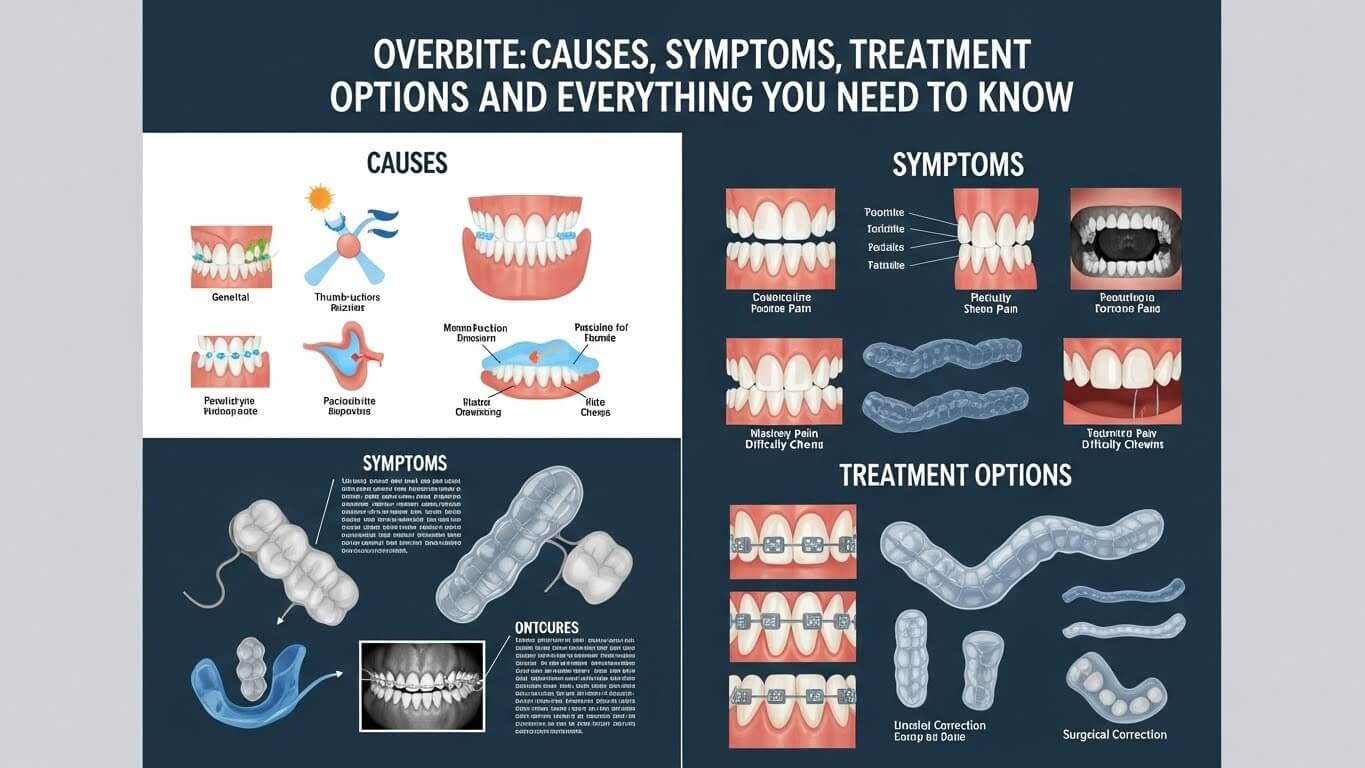
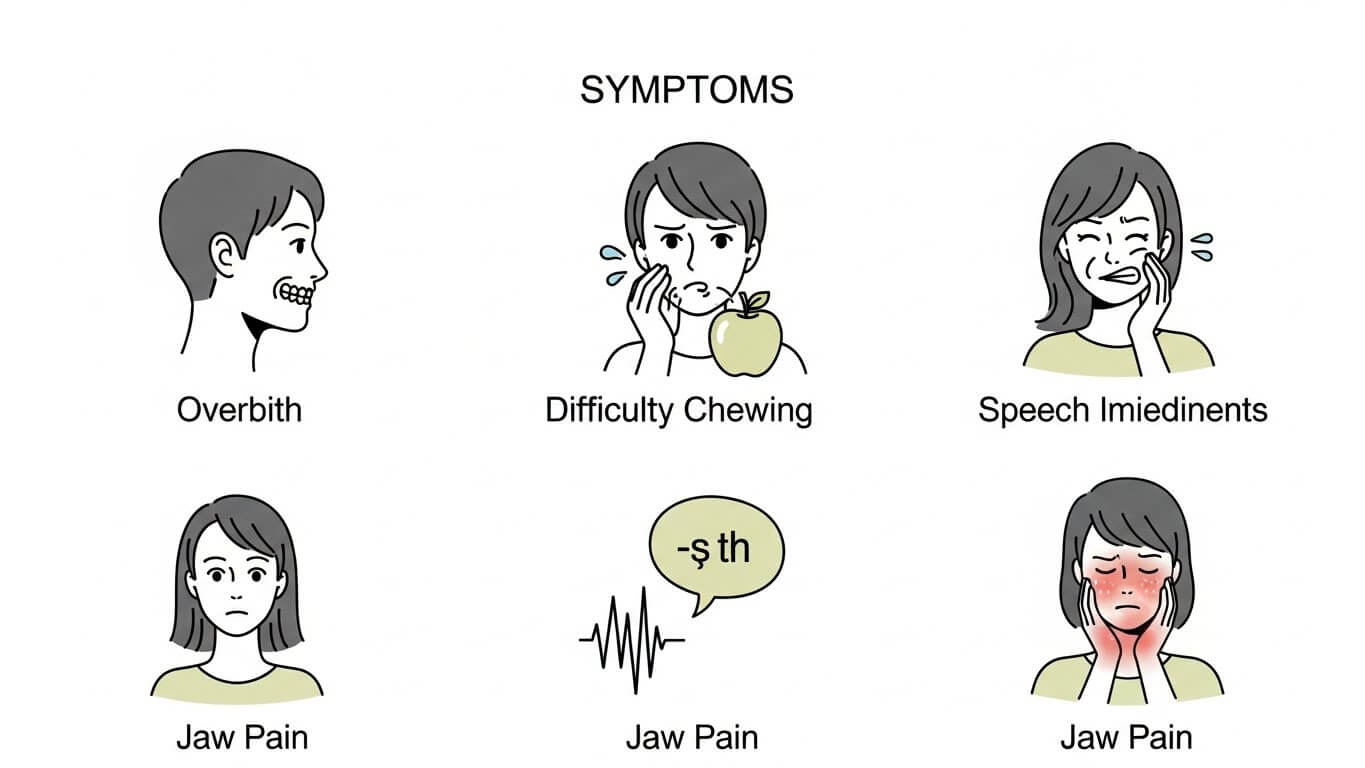
Some people with an overbite have no symptoms at all. Others may experience jaw pain, headaches, difficulty chewing, or speech problems. Tooth wear and sensitivity are also common signs.
In more severe cases, an overbite may cause the lower teeth to bite into the roof of the mouth or damage the gums behind the upper teeth.
How Overbite Affects Oral Health
An untreated overbite can cause uneven pressure on teeth, leading to excessive wear and cracking. Gums may become irritated or damaged due to improper contact between teeth.
Over time, an overbite can also contribute to jaw joint problems, known as temporomandibular joint disorders, which may cause pain and stiffness.
Overbite and Jaw Pain
Jaw pain is a common complaint among people with moderate to severe overbite. When the bite is misaligned, the jaw muscles must work harder, leading to tension and discomfort.
This strain can spread to the neck, shoulders, and head, sometimes causing chronic headaches or facial pain.
Overbite and Speech Issues

In some cases, an overbite can affect speech clarity. Certain sounds may be harder to pronounce if the teeth do not meet properly.
Speech problems related to overbite are more common in severe cases and may improve after treatment.
How Dentists Diagnose an Overbite
Dentists diagnose an overbite through a physical examination, dental X-rays, and bite analysis. They assess how the teeth come together and measure the overlap.
A proper diagnosis helps determine whether treatment is necessary and which option will be most effective.
Do All Overbites Need Treatment?
Not all overbites require treatment. Mild overbites that do not cause discomfort or damage may simply be monitored over time.
Treatment is recommended when an overbite affects oral health, causes pain, or impacts confidence and quality of life.
Overbite Treatment Options
There are several ways to treat an overbite, depending on age and severity. Braces are a common treatment that gradually moves teeth into better alignment. Clear aligners offer a more discreet option for many patients.
In some cases, dental appliances or retainers may be used to guide jaw growth in children. Severe skeletal overbites may require surgical treatment, though this is less common.
Braces for Overbite Correction
Braces are one of the most effective treatments for correcting an overbite. They apply steady pressure to move teeth into the proper position over time.
Treatment length varies but often lasts between one and three years, depending on complexity.
Clear Aligners for Overbite
Clear aligners are a popular choice for adults and teens with mild to moderate overbite. They are removable, nearly invisible, and comfortable.
Aligners work best when worn consistently as directed by a dental professional.
Overbite Surgery: When Is It Needed?
Surgery is usually only considered for severe skeletal overbite, where the jaw bones are significantly misaligned. This option is carefully planned and typically combined with orthodontic treatment.
Most overbites do not require surgery, and non-invasive treatments are often successful.
Can Overbite Get Worse Over Time?
An overbite can worsen if left untreated, especially if combined with habits like teeth grinding. Teeth naturally shift as we age, which can increase misalignment.
Regular dental checkups help catch changes early and prevent complications.
Overbite and Self-Confidence
Many people feel self-conscious about their smile due to an overbite. This can affect confidence in social and professional settings.
Correcting an overbite often leads to improved self-esteem and a more comfortable smile.
Preventing Overbite in Children
Encouraging healthy oral habits early can help reduce the risk of overbite. Limiting thumb sucking, using pacifiers appropriately, and scheduling early dental visits are important steps.
Early intervention can guide proper jaw development and tooth alignment.
Living Comfortably With an Overbite
Some people choose not to treat a mild overbite and live comfortably without issues. Maintaining good oral hygiene and regular dental visits helps prevent complications.
Listening to your body and addressing discomfort early is key.
Final Thoughts
An overbite is a common dental condition that ranges from mild to severe. While not all overbites require treatment, understanding your options helps you make informed decisions about your oral health. With modern dental care, effective and comfortable solutions are available for people of all ages.