
Introducing
Learning about stretching exercises for iliotibial band can make a big difference if you feel tightness or discomfort along the outside of your thigh or knee. The iliotibial band, often called the IT band, is a long strip of tissue that runs from the hip down to the knee. When it becomes tight, it can affect how you move, walk, or exercise.
This article explains the iliotibial band in simple words and shows how gentle stretching exercises can help improve comfort and movement. The focus is on safe, slow, and balanced stretching that fits into everyday life.
What Is the Iliotibial Band
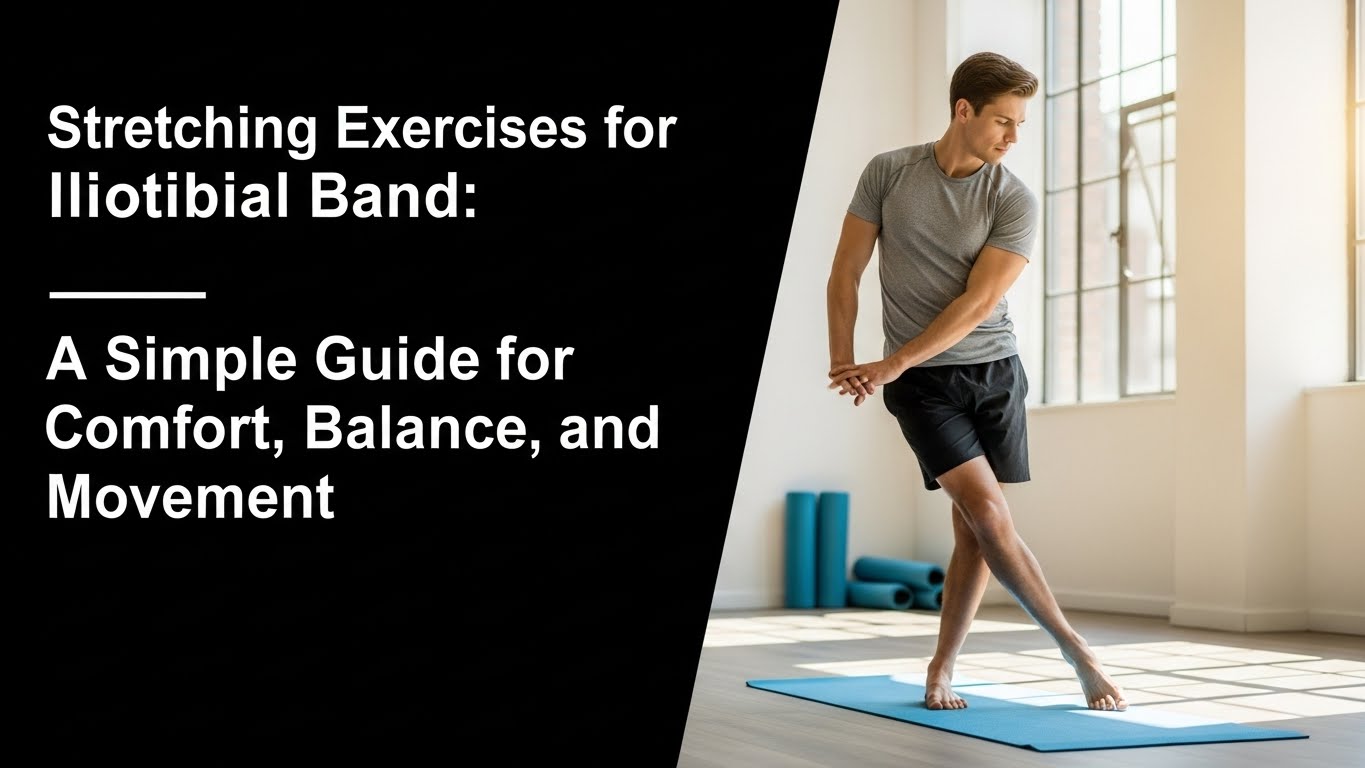
The iliotibial band is a thick band of connective tissue that runs along the outer side of the leg. It starts near the hip and goes down to the outside of the knee.
Its job is to help stabilize the leg during walking, running, and standing. Because it is involved in many movements, it can become tight if the body is overused, unbalanced, or inactive for long periods.
Why the Iliotibial Band Gets Tight
IT band tightness can happen for many reasons. Sitting for long hours, repeating the same movements, or having muscle imbalances can all contribute.
Sometimes the muscles around the hips and thighs are weak or tight, which puts extra stress on the iliotibial band. Stretching helps reduce tension and supports smoother movement.
Common Signs of IT Band Tightness
One common sign of IT band tightness is a pulling or tight feeling along the outer thigh. Some people notice discomfort near the knee, especially during movement.
Stiffness when standing up or after activity can also be a sign. These sensations are your body’s way of asking for gentler movement and care.
Why Stretching Exercises for Iliotibial Band Matter
Stretching exercises for iliotibial band help improve flexibility and reduce tension. Stretching also increases awareness of how your body moves.
When stretching is done gently and regularly, it can support better posture, smoother movement, and overall comfort without forcing the body.
When to Stretch the Iliotibial Band
Stretching can be done at different times of the day. Some people like to stretch in the morning to loosen up, while others prefer stretching after activity.
The most important thing is to stretch when your body feels warm and relaxed. Avoid stretching when muscles feel cold or stiff.
How Much Stretching Is Enough
Stretching does not need to be long or intense. Even a few minutes of gentle stretching can be helpful.
The goal is not to push through pain but to feel a mild stretch that slowly releases tension. Consistency matters more than duration.
Standing Side Stretch for IT Band
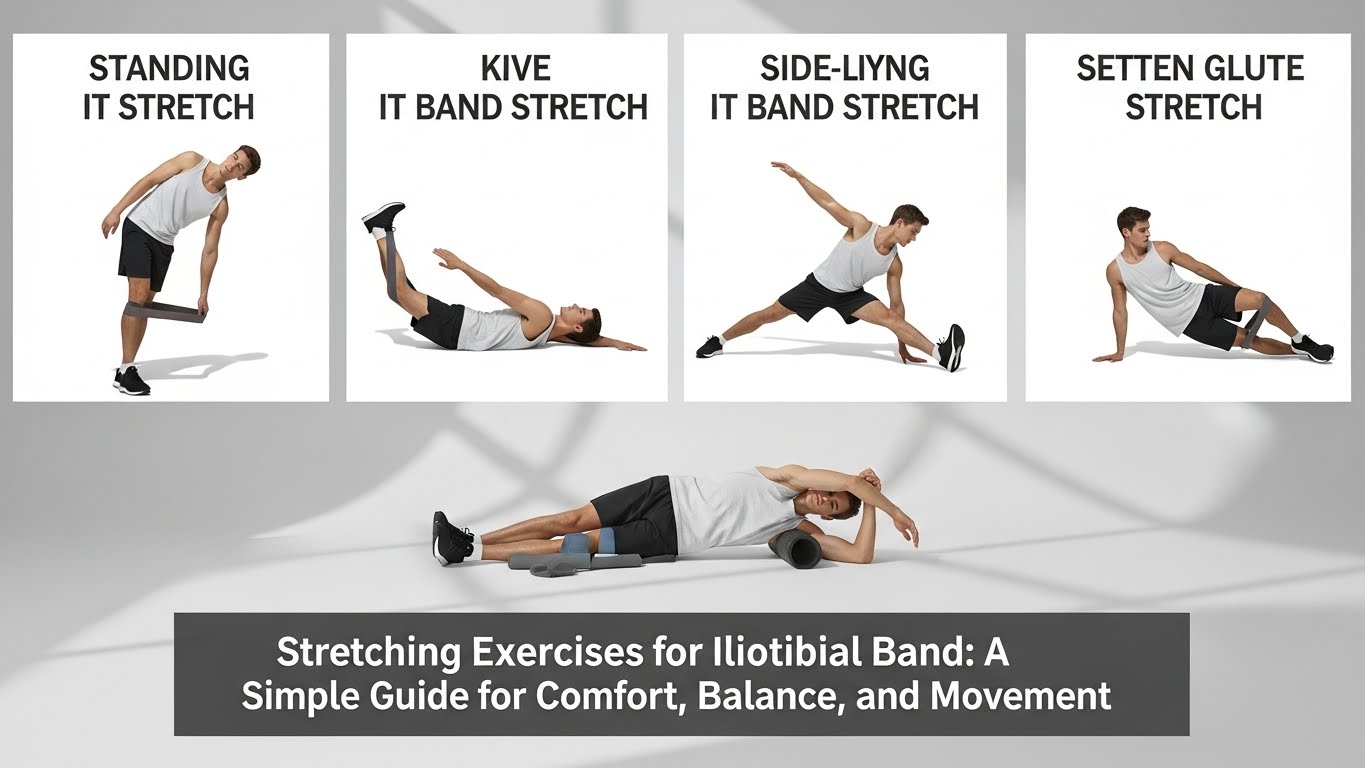
One simple stretching exercise for the iliotibial band is the standing side stretch. Stand tall with your feet close together.
Cross one leg behind the other and gently lean to the side. You should feel a stretch along the outside of the thigh and hip. Hold the stretch calmly and breathe slowly.
Seated IT Band Stretch
The seated stretch is a good option for people who prefer floor or chair stretches. Sit upright with one leg extended.
Cross the opposite leg over and gently turn your body toward the bent knee. This stretch targets the outer thigh and hip area without putting pressure on the knees.
Lying IT Band Stretch
A lying stretch allows the body to fully relax. Lie on your back and bring one leg across your body while keeping your shoulders on the floor.
This position creates a gentle stretch along the side of the leg. Keep breathing slowly and avoid forcing the movement.
Hip-Focused Stretch for IT Band Support
The iliotibial band is closely connected to the hip muscles. Stretching the hips helps reduce strain on the IT band.
A gentle hip stretch, such as placing one ankle over the opposite knee while seated, can support flexibility and balance.
Why Breathing Matters During Stretching
Breathing plays a big role in stretching exercises for iliotibial band. Slow breathing helps muscles relax and release tension.
Holding your breath can make stretching feel uncomfortable. Deep, calm breaths help the body respond better to movement.
Stretching vs Forcing the IT Band
Stretching should never feel painful. Pain is a sign to stop or reduce intensity.
The IT band itself does not stretch easily, but stretching the muscles around it helps reduce tightness and improve comfort.
The Role of Balance and Posture
Good posture supports the iliotibial band. Standing or sitting with awareness helps prevent uneven pressure on the legs.
Stretching combined with balanced movement helps the body move more naturally and comfortably.
How Often to Do IT Band Stretches
Stretching exercises for iliotibial band can be done a few times per week or daily if they feel comfortable.
Short, regular sessions are better than long, intense ones. The body responds best to gentle repetition.
Common Stretching Mistakes to Avoid
One common mistake is stretching too hard or too fast. This can increase tension instead of reducing it.
Another mistake is ignoring other areas like the hips and glutes. A balanced approach supports better results.
Listening to Your Body While Stretching
Your body gives signals during stretching. Mild tension is normal, but sharp or sudden pain is not.
Always listen to how your body responds and adjust movements accordingly. Stretching should feel supportive, not stressful.
Stretching and Daily Movement
Stretching works best when combined with regular movement. Walking, gentle activity, and posture awareness all support the IT band.
Stretching alone is helpful, but daily habits make the biggest difference over time.
When to Be Extra Careful
If you feel ongoing pain or discomfort that does not improve, it is important to rest and seek professional guidance.
Stretching is meant to support comfort, not replace medical advice or care.
Building a Gentle Stretching Routine
A simple routine includes two or three stretches done slowly. There is no need for complex routines or long sessions.
The key is creating a habit that feels easy to maintain and fits into your daily life.
Final Thoughts
Stretching exercises for iliotibial band help support comfort, flexibility, and smooth movement. When done gently and consistently, stretching becomes a form of self-care rather than a task.
By moving slowly, breathing deeply, and respecting your body, you can create a stretching practice that feels calming and supportive over time.