Introduction
Choosing between almond butter and peanut butter can feel confusing. Both are creamy, tasty, and popular in kitchens around the world. People spread them on toast, blend them into smoothies, and use them in snacks and sauces. Yet many still ask the same question: almond butter vs peanut butter—which one is better? This detailed guide breaks everything down in simple words, using real-life thinking, so you can make the best choice for your body, taste, and budget.
What This Article Covers About Almond Butter vs Peanut Butter

This article is written to help you clearly understand the difference between almond butter and peanut butter. We will compare nutrition, taste, health benefits, cost, allergies, weight goals, and daily use. The goal is not to crown a single winner for everyone, but to help you choose what fits your life best. Every section is written in an easy, natural way so anyone can understand it without feeling overwhelmed.
Understanding Almond Butter vs Peanut Butter in Simple Terms
Almond butter is made by grinding almonds until they turn into a smooth paste. Peanut butter is made the same way, but with peanuts. While peanuts are actually legumes and not nuts, they are still grouped with nuts in daily use. The main difference starts with the source, and from there, nutrition, taste, and benefits begin to change.
Nutritional Overview of Almond Butter vs Peanut Butter
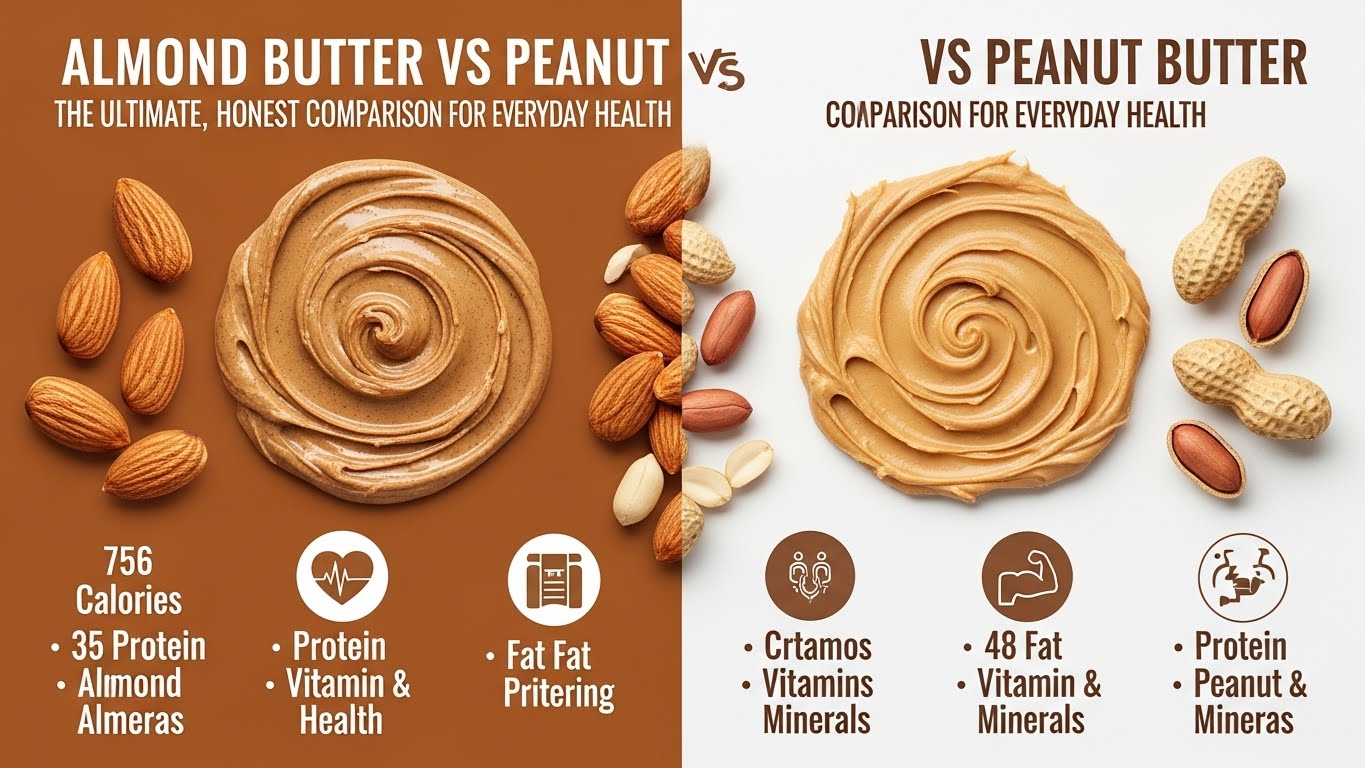
When people compare almond butter vs peanut butter, nutrition is usually the first thing they think about. Almond butter is slightly higher in calories, healthy fats, vitamin E, and magnesium. Peanut butter has more protein per serving and often costs less. Both provide healthy fats that help keep you full and give your body energy throughout the day.
Calories and Energy Levels Compared
Almond butter usually contains a few more calories per spoon than peanut butter. These calories mostly come from healthy fats that support the brain and heart. Peanut butter offers slightly fewer calories but still provides long-lasting energy. For very active people, both spreads can be helpful. The difference in calories is small and usually not a deal-breaker.
Protein Content: Almond Butter vs Peanut Butter
Protein is important for muscle repair, strength, and daily body functions. Peanut butter contains a bit more protein than almond butter. This makes peanut butter popular among athletes and people focused on muscle building. Almond butter still contains protein, just a little less. If protein is your top goal, peanut butter may have a small edge.
Healthy Fats and Heart Health Benefits

Both almond butter and peanut butter contain monounsaturated fats, which are good for heart health. Almond butter has a slightly higher amount of these fats, along with more vitamin E, which supports skin and heart health. Peanut butter also supports heart health when eaten in moderation and without added sugars or oils.
Vitamin and Mineral Comparison
Almond butter stands out for its vitamin E, magnesium, and calcium content. These nutrients help support bones, skin, and muscle function. Peanut butter provides more niacin and folate, which support metabolism and brain health. When comparing almond butter vs peanut butter, almond butter usually wins in minerals, while peanut butter balances things with B vitamins.
Taste and Texture: What People Really Notice
Taste is personal, and this is where opinions differ strongly. Almond butter has a mild, slightly sweet, and nutty flavor. Peanut butter has a bold, roasted taste that many people grew up loving. Texture can range from smooth to chunky for both, but peanut butter is often creamier and thicker, while almond butter can feel slightly grainy depending on the brand.
Almond Butter vs Peanut Butter for Weight Loss
For weight loss, both can work if eaten in the right amount. Almond butter may help control hunger longer because of its fat and fiber content. Peanut butter can also support weight loss when portion sizes are controlled. The key is moderation. Eating too much of either can slow progress, even though they are healthy foods.
Almond Butter vs Peanut Butter for Muscle Gain
People trying to gain muscle often lean toward peanut butter because of its slightly higher protein content and lower cost. It is easy to add to shakes, oats, and sandwiches. Almond butter still supports muscle growth but may be better suited for those who want extra nutrients along with healthy fats.
Allergy Concerns and Safety

Peanut allergies are more common and can be serious. Almond allergies exist but are less widespread. For people with peanut allergies, almond butter is often used as a safe alternative, though cross-contamination must be checked. When comparing almond butter vs peanut butter, allergy risk is a major deciding factor for many families.
Ingredient Quality and Additives
Natural versions of both spreads should contain only one ingredient: almonds or peanuts. Some store-bought versions include added sugar, salt, or oils. These extras reduce health value. Almond butter tends to be sold more often in natural form, while peanut butter frequently contains additives unless labeled natural.
Cost and Availability in Daily Life
Peanut butter is usually cheaper and easier to find. It has been a pantry staple for decades and is available almost everywhere. Almond butter costs more due to almond farming and processing. When comparing almond butter vs peanut butter for budget-friendly eating, peanut butter often wins.
Environmental Impact and Sustainability
Almond farming requires a lot of water, especially in dry regions. Peanuts generally require less water to grow. From an environmental view, peanut butter may have a smaller footprint. This matters to people who consider sustainability when choosing foods.
Cooking and Recipe Uses Compared

Peanut butter works well in classic sandwiches, sauces, and baking. Almond butter shines in smoothies, healthy desserts, and dressings. Both can be used in sweet and savory dishes. Almond butter has a more neutral taste, while peanut butter adds a strong flavor that stands out.
Almond Butter vs Peanut Butter for Kids and Families
Peanut butter is often loved by kids due to its familiar taste. Almond butter may take time for kids to enjoy. Families dealing with allergies may choose almond butter for safety. Both spreads provide energy and nutrients for growing bodies when eaten responsibly.
Digestibility and Gut Comfort
Some people find almond butter easier to digest because it is lower in lectins than peanuts. Others digest peanut butter without any problems. If someone experiences bloating or discomfort, trying the other option can help identify what works best.
Choosing the Healthiest Option for You

There is no single winner in the almond butter vs peanut butter debate. Almond butter is rich in vitamins, minerals, and healthy fats. Peanut butter offers more protein, affordability, and a strong flavor. The healthiest choice depends on your goals, body needs, taste preferences, and budget.
Final Thoughts
Both almond butter and peanut butter deserve a place in a healthy diet. Almond butter is ideal for those seeking extra nutrients and heart-healthy fats. Peanut butter is perfect for protein needs, affordability, and classic comfort. The best choice is the one you enjoy and can eat in balance over time.