Introduction
Dextroscoliosis is a medical term that can sound scary at first, especially when you or someone you care about has just been diagnosed. In reality, many people live full, active lives with this condition. This article is written in clear, simple language to help you truly understand dextroscoliosis, what it means, why it happens, and how it can be managed. The goal is to explain everything in a calm, human way so you feel informed, not overwhelmed.
What Is Dextroscoliosis

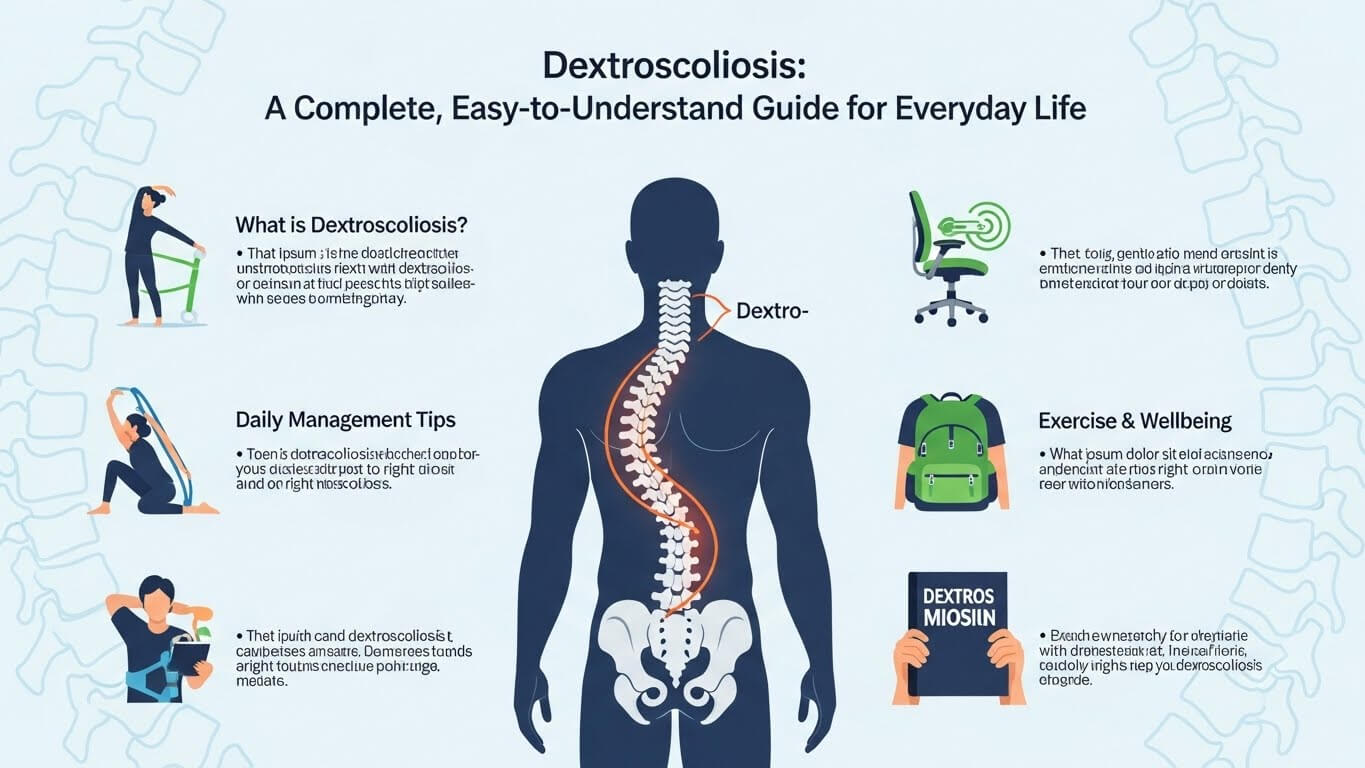
Dextroscoliosis is a type of scoliosis where the spine curves to the right side of the body. The word “dextro” means right, and “scoliosis” means a sideways curve of the spine. Instead of being straight when viewed from the back, the spine forms a curve that bends rightward. This curve can be mild, moderate, or severe depending on how much the spine bends.
Understanding the Spine in Simple Words
The spine is made up of small bones called vertebrae that stack on top of each other. When healthy, the spine looks straight from the back and has gentle curves from the side. These curves help with balance and movement. In dextroscoliosis, the spine shifts to the right, changing the body’s natural alignment and sometimes affecting posture and comfort.
How Dextroscoliosis Is Different From Other Types of Scoliosis
There are different forms of scoliosis based on the direction of the curve. Dextroscoliosis curves to the right, while levoscoliosis curves to the left. Dextroscoliosis is more common, especially in the upper and middle parts of the spine. Knowing the direction helps doctors decide the best approach to care and monitoring.
Common Causes of Dextroscoliosis
In many cases, the exact cause of dextroscoliosis is unknown. This is called idiopathic scoliosis. It often appears during childhood or teenage years when the body grows quickly. Other causes can include muscle imbalances, spinal injuries, birth conditions affecting the spine, or problems with nerves or muscles. Sometimes, dextroscoliosis develops later in life due to aging and spinal wear.
Dextroscoliosis in Children and Teenagers
Dextroscoliosis is commonly found in children and teenagers, especially during growth spurts. Parents may notice uneven shoulders, a tilted waist, or one side of the back appearing higher. Early detection is important because the curve can worsen as the child grows. Regular checkups help track changes and guide treatment decisions.
Dextroscoliosis in Adults
Adults can also have dextroscoliosis, either from childhood or developed later due to spinal degeneration. In adults, symptoms may include back stiffness, muscle fatigue, or discomfort after standing or sitting for long periods. Adult dextroscoliosis often progresses slowly and is managed with lifestyle changes and supportive care.
Signs and Symptoms of Dextroscoliosis
Symptoms of dextroscoliosis vary from person to person. Some people have no pain and only mild posture changes. Others may experience back discomfort, uneven shoulders, hip imbalance, or fatigue. In more noticeable cases, the rib cage may stick out slightly on one side due to spinal rotation.
How Dextroscoliosis Is Diagnosed
Doctors diagnose dextroscoliosis through physical exams and imaging tests. A common first step is observing posture and spinal alignment. X-rays are used to measure the curve and determine its severity. Early diagnosis helps ensure proper monitoring and treatment planning.
Understanding Curve Severity in Dextroscoliosis
The severity of dextroscoliosis is measured in degrees. A mild curve usually causes few issues and may only require observation. Moderate curves may need physical therapy or bracing. Severe curves can affect breathing or movement and may require more advanced care. Most people fall into the mild to moderate category.
Does Dextroscoliosis Cause Pain
Not everyone with dextroscoliosis experiences pain. Many people live without discomfort, especially with mild curves. Pain is more common in adults due to muscle strain or spinal wear. When pain occurs, it is often manageable with simple treatments and daily adjustments.
Impact of Dextroscoliosis on Daily Life
Dextroscoliosis can affect posture, balance, and confidence, especially if the curve is visible. Some people feel self-conscious, while others barely notice it in daily life. With proper care, most individuals continue normal activities such as school, sports, and work without major limitations.
Non-Surgical Treatment Options for Dextroscoliosis
Most cases of dextroscoliosis do not require surgery. Non-surgical treatments may include physical therapy, posture training, stretching, and strengthening exercises. In growing children, braces may be used to prevent the curve from worsening. These approaches focus on comfort, movement, and long-term spine health.
Role of Exercise in Managing Dextroscoliosis

Exercise plays a helpful role in managing dextroscoliosis. Strengthening the muscles around the spine improves support and posture. Stretching helps reduce stiffness and muscle imbalance. Exercise programs are usually customized to each person’s curve and comfort level.
Posture and Lifestyle Changes for Dextroscoliosis
Good posture can make a big difference for people with dextroscoliosis. Sitting and standing evenly helps reduce strain on the spine. Simple lifestyle changes, such as adjusting desk height or avoiding heavy bags on one shoulder, can support spinal balance and comfort.
Can Dextroscoliosis Get Worse Over Time
In children and teens, dextroscoliosis may worsen during growth periods. This is why regular monitoring is important. In adults, progression is usually slow. Many people never experience significant changes. Staying active and following care recommendations helps reduce risks.
Emotional and Mental Health Considerations
Living with dextroscoliosis can affect how a person feels emotionally, especially during the teenage years. Concerns about appearance or body image are common. Support from family, friends, and healthcare providers helps build confidence and emotional well-being.
When Surgery Is Considered for Dextroscoliosis
Surgery is only considered in severe cases of dextroscoliosis when the curve affects breathing, movement, or quality of life. This is not common. Most people never need surgery and manage their condition with conservative care.
Long-Term Outlook for People With Dextroscoliosis

The long-term outlook for dextroscoliosis is generally positive. Many people live normal, active lives without major restrictions. Early detection, regular monitoring, and healthy habits support spinal health over time.
Living Confidently With Dextroscoliosis
Dextroscoliosis does not define a person. With understanding and proper care, individuals can stay active, strong, and confident. Learning about the condition removes fear and helps people make informed choices for their health.
Final Thoughts
Dextroscoliosis is a manageable spinal condition that affects people in different ways. Knowledge, early care, and healthy habits make a meaningful difference. With the right approach, most people continue living comfortably and fully.